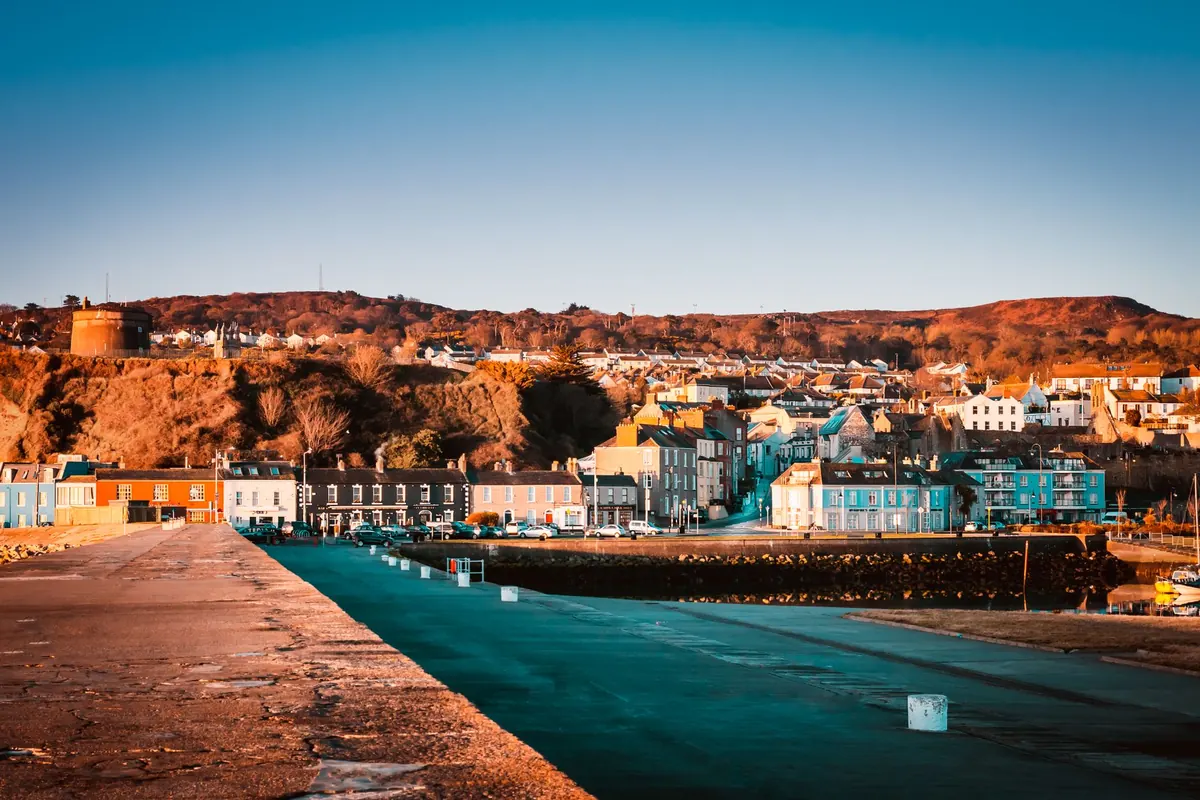
The first week of November in a Ligurian seaside town has a sound of its own. Not silence — a shutter knocking somewhere above the harbour, a dog taking its person along the last stretch of promenade, the sea working at the shingle with more insistence than it had in August. The bar on the corner is open. There are three people in it, and one of them is the owner. You order a coffee, open a notebook, and nobody wonders what you are doing there.
That is the argument, roughly. The Italian coast in November is not a consolation prize for missing summer. It is a better place to write, and a quieter, cheaper, more interesting place to be. What follows is why the off-season suits a journal, and how to arrange a week that actually produces pages.
Start with what closes, because it matters. Beach clubs stack their loungers. A good share of seasonal restaurants and hotels shut from November until spring, and boat services to the smaller coves thin out or stop altogether. Some coastal paths and beach accesses are maintained only in season. Nobody should arrive expecting the coast of July with fewer people in it.
But the town itself does not close. People still buy bread, fill the pharmacy queue, argue about parking outside the school at half past eight. What goes away is the performance of summer: the menu boards with photographs, the rented umbrellas, the evening promenade as theatre. What remains is a working place with weather.
The rule I use when choosing a base is simple: pick a town with a winter and a school. Camogli, Levanto and Lerici on the Ligurian coast; Sperlonga or the smaller centres along the Tuscan and Lazian shore; Otranto, Cefalù or the towns around Trapani further south. A resort built entirely around July can feel like a film set with the lights off. A real coastal town in November feels like itself, which is far more useful to a writer.
In August the coast asks you to look at other people. In November it asks you to look at the place. The change is not sentimental; it is mechanical. When there is nothing to watch, you start noticing what is actually there: the way light sits on a wet stone step, the specific clatter of a metal shutter, woodsmoke over salt, the two men who take the same bench at eleven every morning and never once look at the sea.
The second effect is less obvious. Writing in a crowded café can quietly turn into a small performance — the notebook as prop, the glance around to see whether anyone has noticed you being observant. Off-season, nobody is watching you fill a page. You can sit two hours over one espresso, cross things out badly, and leave without having played a part.
Try one exercise for the first few days: the same bench, the same hour, five mornings running. Write a page each time. Describe what changed, what didn't, and what you would have missed by coming only once. By the fifth morning you have a record of a place rather than an impression of it — most of the difference between a travel journal and a stack of postcards.
Off-season rates on the Italian coast are usually a fraction of August's, and the money is best spent on time rather than upgrades. A week that would have bought four nights in summer buys ten in November, which is the difference between a holiday with a notebook in it and an actual writing stretch.
Book directly where you can, and ask a few plain questions before you commit. Small hotels in November are often run by one person who is genuinely glad of the booking and will answer honestly.
The last question matters more than it sounds. A sea view is lovely; a flat surface with decent light and a chair you can sit in for two hours is what gets the work done. If the room has neither, ask whether you can use the breakfast room in the afternoon. Off-season, the answer is very often yes.
November is a wet month across much of Italy, and the coast is no exception. Rain tends to arrive in fronts rather than settle in for days, so a soaked morning and a rinsed, clear afternoon are entirely normal. Build the week around that instead of fighting it: walk in the dry hours, write through the rain.
The light is the reward. The sun sits low, shadows are long by three in the afternoon, and the two dominant winds give the coast two different moods — the tramontana clearing everything to a hard edge, the scirocco softening the horizon into haze. Write about the same stretch of sea in both and you will see how much of what you thought was the place was actually the weather.
The temptation off-season is to treat the emptiness as permission to drift. A loose structure works better than either drifting or a rigid timetable.
Five days of that produces more usable material than two weeks of good intentions.
Choose a town with a winter, not a resort with a season. Book a room you can cancel, ask what stays open in the week you are coming, and confirm the heating. Pack for rain and wind, plan one indoor day in advance, and keep the notebook in your coat rather than your bag — November gives you short, bright windows and you will want to write in them without unpacking anything.
Then lower your expectations of the coast and raise them of yourself. The sea will be grey, half the restaurants will be shut, and the light at four in the afternoon will be worth the whole trip. You came for the quiet. Use it.
Photo: O Emmanuel / Pexels