The best travel stories rarely come from the destination. They come from the six hours before it: the seat you found, the person who adopted you as a conversation partner somewhere past the third stop, the argument with a ticket machine at 6:40 in the morning. Which is why the train-versus-car question matters more than it looks. Both will get you from A to B. Only one of them will hand you a story on the way, and which one depends on the kind of traveller you are and the kind of notebook you keep.
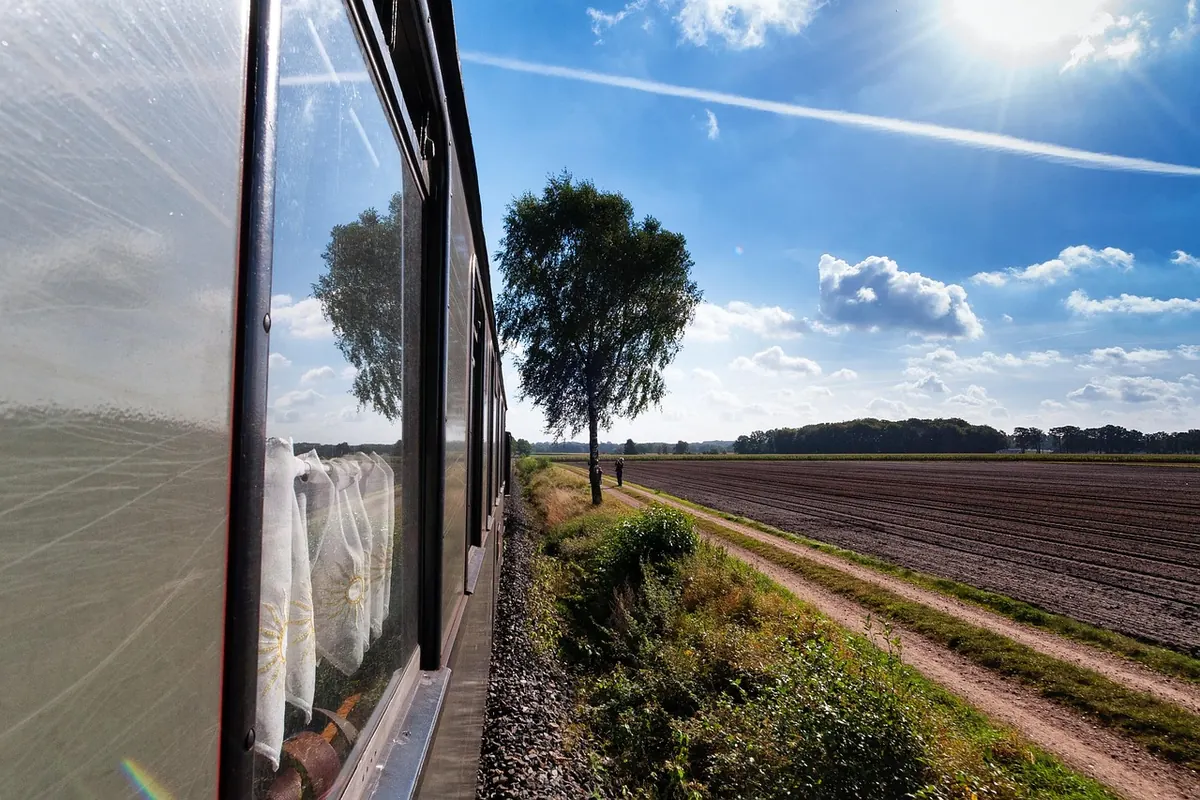
On a train you are a spectator, and that is not a demotion. The window does the framing for you: a rectangle of hedge, then a river, then forty seconds of somebody's washing line. You can look at it for an hour without consequence. Nobody needs you to watch the road. This is how you end up noticing the backs of towns — the warehouses, the allotments, the scrapped cars behind the fence — the parts a place doesn't dress up for visitors. Train travel shows you the country's plumbing.
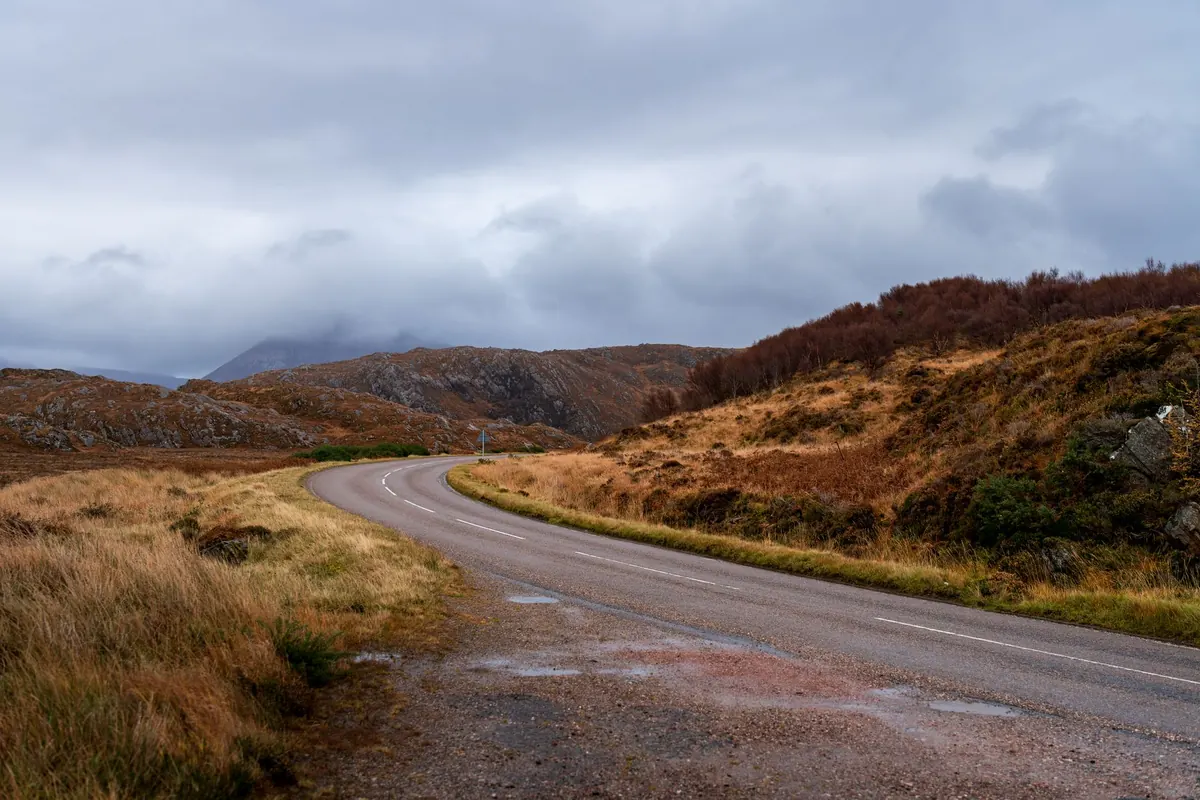
A car shows you its face. You choose the route, so you see the square, the church spire you aimed for, the valley opening exactly where the map promised. But your attention is split, permanently. Even on an empty road, a part of your brain is running arithmetic on the next bend. That is why driving feels so tiring and yet so hard to remember afterwards.
The exception is obvious and worth saying: as a passenger, a car becomes one of the best observation platforms there is. Low, slow, close to the ground, with the smell of cut grass coming through the window and the freedom to turn your head.
The car wins the argument on paper. You can stop at the fruit stall, follow the sign to a ruined abbey, take the road that looks more interesting. The trouble is that this freedom often goes unused. When every stop is possible, none of them feels urgent, and you arrive at your destination having driven past six villages you'd have loved.
Trains impose constraints, and constraints are good for stories. A timetable forces you to plan in a different way: instead of infinite choice, you get a small decision — do I get off here for two hours, or stay on? Getting off in a town you hadn't researched, because the platform looked interesting, is one of the great underrated travel moves. You will be back on a train within a few hours. Nothing is lost.
Two habits that work:
This is not close. A train has a fold-down table, a rhythm, and no obligation to look up. Handwriting on a moving train comes out slightly wobbly, which is part of its charm; the sentences tend to be shorter and more honest because you're writing them in real time, looking up between them. Long train journeys are the only form of transport that reliably produces pages.
The car gives you a driver who cannot write and a passenger who can, badly. If you're the passenger, keep a small notebook in the door pocket rather than buried in a bag, and write in short bursts at stops — three lines while the tank fills, five lines at the viewpoint. Recording voice notes is fine, but transcription later is a chore that rarely happens.
A few practical bits: a pen that doesn't smudge, a notebook small enough to hold in one hand, and a seat choice that helps. If motion sickness is an issue for you, facing forward on a train or sitting in the front passenger seat makes writing far more comfortable; if it's persistent or severe, it's worth asking a pharmacist or doctor rather than pushing through.
Car costs are mostly invisible. Insurance, servicing and depreciation were paid long before the trip, so each individual journey feels nearly free — fuel and a coffee. The true cost per kilometre is higher than the tank receipt suggests, and it grows quietly at the edges: parking in the centre of a city, tolls, the scratch you'd rather not fix.
Train tickets, by contrast, are visible and unpleasant up front, but they are also negotiable in ways drivers forget. Booking ahead usually costs less than buying on the day. Slower regional services on the same corridor are often cheaper than the flagship fast train. A night train can replace a hotel night, which changes the arithmetic completely. None of this is a budget plan for your household — for anything involving real financial commitments, talk to somebody qualified — but as a rough sorting tool, it's useful to compare the whole journey, door to door, rather than the ticket against the fuel.
Train encounters are given, not chosen. You sit down next to someone and the shared silence either holds for four hours or breaks in the first ten minutes. When it breaks, you get the person who explains the region you're crossing, who tells you which stop has the good market, who shares a bag of cherries without ceremony. Delays are a social event on a train: everyone becomes briefly conspiratorial. Station cafés at odd hours are their own genre of human contact.
Car encounters happen at stops, and they are transactional in the best sense — the petrol station attendant, the farmer at the gate, the person you ask for directions and who then draws you a map on the back of a receipt. They're brief and vivid and easy to write down five minutes later. And there is a category the train can't produce: the encounter with your own passengers. Six hours on a motorway will tell you more about a friendship than a year of dinners.
Whatever you choose, the material doesn't collect itself. Write something within the first hour, while the novelty is still sharp — the state of the seat, the announcement you didn't understand, the thing the man across the aisle said. Note the small numbers: the time, the platform, the name of the stop where the light changed. Those details are what make a scene feel lived rather than remembered. And keep the notebook where your hand falls, not where it fits.
Then, on the way home, resist the urge to summarise the trip. Put down one moment from the journey itself. That's usually where the story was all along.
Photo: SLPix / Pixabay